Andrew Ross Sorkin does the work of about five people. He founded and writes the DealBook newsletter for the New York Times. He hosts Squawk Box on CNBC every morning at 6am. He runs the DealBook Summit, which has become the premier annual interview event across business, policy, and technology. He co-created the TV show Billions. He wrote the definitive account of the 2008 financial crisis, "Too Big to Fail", and now he's written "1929," a 600-page epic about the greatest crash in Wall Street history. So how does he actually do all of this?
Today we sit down with Andrew to answer exactly that question. We dive into his philosophy on interviewing, his start as a teenage freelancer at the New York Times, how he built DealBook from a daily column into a media empire, and his actual daily routine that somehow fits all of this into 24 hours!
Tobi is one of the most thoughtful people in the technology industry. He's also one of the very few people who started as a programmer -- just trying to solve his own problem -- and still runs his company as CEO today even as it approaches a $200B market cap. Tobi has done this in two big ways: first, a willingness throw away his past beliefs in the face of new data, growing into the leader the company needed. And second, by remaining a close observer (and participant!) in how new technology emerges that changes what is possible.
Today we talk with him about both. The first half of the episode is about what has changed for him in the AI era. How he spends his time with AI throughout the day, how he thinks about what AI unlocks philosophically, and what he thinks the impact will be on all of us and what we build. The second half is more about Shopify. How he dealt mentally with the explosion in stock price in 2021 from a 20x revenue multiple to a 70x revenue multiple. And then, what he subsequently did when it all came crashing down. We also talk with him about the leadership and product principles that he's employed to steadily grow the company's revenues to an all-time high today.
Is AI just better software? Or something completely different that requires a new paradigm to understand? Today we sit down with Bret Taylor and Clay Bavor, two of the best product builders in the world to tackle that question. Bret and Clay are the co-founders of the AI company Sierra.
Brett's resume reads like a greatest hits of Silicon Valley: co-creator of Google Maps, founder of FriendFeed (acquired by Facebook where he became CTO), founder of Quip (acquired by Salesforce where he became co-CEO), former Chairman of the Board at Twitter, and current Chairman of the Board at OpenAI. Clay spent 18+ years at Google, starting as an APM alongside Brett and eventually running product for Gmail, Drive, Docs (all of Google Workspace), Google Labs, and the company's AR/VR efforts.
In addition to AI, today’s conversation has some great tech industry history discussion and old Google stories, perfect to tide us all over between Google Part I and Part II!
Additional Topics:
The Savannah Bananas have created a whole new sport. It’s baseball, but it’s not. It’s fast-paced, exciting, and incredibly entertaining. For example, if you're batting, and you step out of the batter’s box... it’s a strike. If you bunt, you’re out. If a fan catches a foul ball… you’re also out. Games are capped at two hours with no exceptions. It’s sacrilegious to traditional baseball fans everywhere. But it’s hard to argue with their numbers: they have 3.2 million fans on a waiting list to see them and have been selling out 80,000-seat football stadiums over the past few months!
Today, we sit down with Jesse Cole, founder of the Savannah Bananas and creator of Banana Ball. We unpack the whole story, staring with a failing college summer league team, an air mattress, and a $30 weekly grocery budget. But these days... it's safe to say that Jesse and his wife don’t have to sleep on an air mattress anymore! And they have built the business in their own way, fully under their control, and uniquely “fans first”. They have a unique all-in ticketing model, where your game ticket gets you full access to food along with your seat. There are no ads or sponsorships. There are no ticket fees or middlemen. And in fact, Jesse and crew will even pay the sales tax on your ticket for you! Jesse is just totally obsessed with delighting fans, controlling the end-to-end experience, and thinking long term… even if it means leaving (a lot) of money on the table today.
This may be our most fun ACQ2 (or Acquired!) episode ever. Enjoy!
On our AWS episode, we talked briefly about the next chapter of cloud: data warehouses. But what makes them so powerful? Why do enterprises rely on them? And how will cloud customers collaborate on data stored in multiple clouds?
We sit down with Kamakshi Sivaramakrishnan, the co-founder and CEO of Samooha, a new company backed by Altimeter and Snowflake Ventures to tackle the problem of secure data sharing and collaboration in the cloud. Kamakshi has an impressive background to speak to this problem, having been a part of AdMob (sold to Google), and the founder/CEO of Drawbridge, which sold to LinkedIn. She then went on to work in Microsoft's Office of the CTO, where she obviously had a lot of experience understanding the needs of cloud customers.
If you want a better understanding of how enterprises use the cloud, multi-cloud architecture, and how security and privacy works with customer data at scale, this episode is for you!
Statsig CEO and former Facebook VP Vijaye Raji joins us to discuss democratizing the tools of big tech. Before starting Statsig, Vijaye spent 10 years at Facebook where he led the development of their mobile ad product (yes — THAT mobile ad product that’s the core of FB today).
We talk all about about Facebook’s early days in mobile, and the internal building and shipping process that let them continuously experiment and roll out features out to billions of users, which Statsig is now bringing to engineering and product teams everywhere. This episode is a must-listen for product builders at all stages!
Listen in any podcast player.
We sit down with Altimeter Capital’s head of Capital Formation Meghan Reynolds (who previously was TPG’s global co-head of Capital Formation for 10 years) to talk about everything that goes into the LP - GP relationship at venture funds. We cover how (and why) to think strategically about Capital Formation, why it should be about so much more the just investor relations / fundraising, and also why and how it’s going to change dramatically over the next decade. This was a GREAT conversation, and very relevant for GPs, LPs, and also company founders and employees heading into 2023 and post zero-interest-rate capital markets.
Listen in any podcast player.
Links:
With 2020 and (hopefully soon) the global pandemic coming to a close, both existing and new companies everywhere will soon face a choice of how to operate going forward. Embrace the "future" that was pulled forward by the pandemic and remain remote? Or return fully/partially to a physical office environment? For those who choose the future (and investors who are considering betting on them), Doist and its CEO Amir Salihefendić provide a 10-year case study of both the challenges that arise and the opportunities unlocked by embracing the internet to its fullest extent in growing and running an organization. And oh yeah — along the way they built a profitable, double-digit $m ARR business with 100 employees, that's been completely bootstrapped on $0 capital invested. We dive into it all!
Despite many advances in industry transparency over the past decade, much about the actual "jobs of a VC" remains locked inside venture's apprenticeship model and institutional knowledge at firms. We aim to change that with the VC Fundamentals series: our goal is to draw back the curtain on the actual tasks that VCs do day-to-day, how you can learn them, and ultimately what's required to succeed. We hope this series will be helpful both to anyone looking to break into the industry (and even to those who are already practicing), and also for entrepreneurs and consumers of venture capital to understand more about the motivations and activities of VCs across the table.
We continue our VC Fundamentals series with Portfolio Construction & Management — how do you build and manage a fund's portfolio as a whole, beyond each individual portfolio company and investment decision? We brought in two of the very best people in the world to help us dissect this topic: Jaclyn Hester & Lindel Eakman of Foundry Group. Jaclyn and Lindel have been early and longtime LPs in some of the best venture funds in the world: USV, True, Spark — and of course Foundry — and now also sit on the GP side of the table at Foundry. Tune in for a master class on how the best VC managers think about generating and optimizing fund performance.
Superhuman CEO Rahul Vohra joins us for an absolute masterclass on startup fundraising that shatters much outdated traditional wisdom in the space. We cover why it's possible to build momentum and raise even as a solo founder, how you should think about syndicates vs. "brand name" VCs, and why you always want to be preempted and how to make that happen. This episode is a 100% must-listen for anyone raising money now, or planning to in the future.
On our latest Acquired Book Club session, we were joined by Brotopia author and Emmy Award-winning host of Bloomberg Technology Emily Chang to discuss everything that went into writing this important book, and everything that's happened since -- especially now in the age of social distancing. You can listen to the full recording on ACQ2.
In some ways Brotopia feels like it was published just yesterday. The first edition came out in February 2018 when Susan Fowler’s blog post, the Google walkouts, Binary Capital, Gamergate and myriad other scandals were all exploding across tech alongside the broader #MeToo movement. The fallout of those events is still being felt today; tech (and we all) are nowhere near out of the woods re: coming to grips with sex and gender harrasment and discrimination in our industry.
Of course at the same time, re-reading Brotopia in 2020 feels like opening a time capsule from another age. The days of creepy VC cuddlepuddles, sex in Zenefits’ stairwells, entrepreneurs passing the “hot tub test” to get funded, and the Gold Club (the infamous San Francisco strip club located in the heart of Soma) being such a common startup team lunch spot that it was known as “Conference Room G” have all been washed away by our new Zoom reality -- hopefully permanently. And, while discussion of tech’s racial imbalance does play a big role in the book, we all know now that it deserves much deeper examination.
But, the core message of Brotopia still resonates just as strongly: tech didn’t have to be this way in the past, and doesn’t have to be this way going forward. As it continues to reshape more and more of society (especially now post-covid), the industry needs to change or we all risk living in a “utopia” that’s utopian only for a very few.
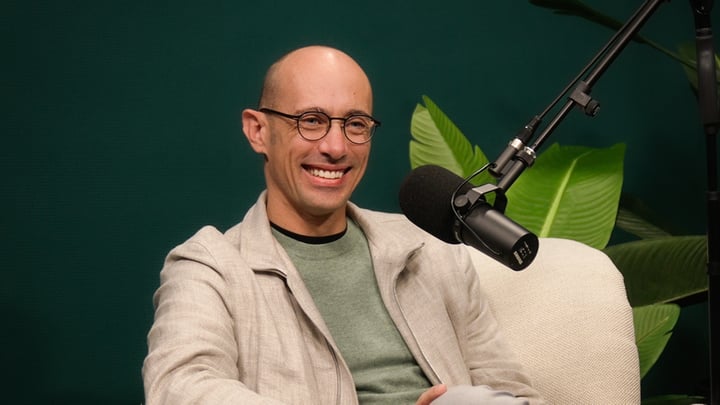
We're joined by Posterous co-founder, former YC partner and current Managing Partner of Initialized Capital Garry Tan to go deep on how YC changed the game for company creation and seed investing, how they thought about building the "cult" of startups, and what lies ahead as the early-stage world continues to globalize and evolve more quickly than ever.
Despite many advances in industry transparency over the past decade, much about the actual "jobs of a VC" remains locked inside venture's apprenticeship model and institutional knowledge at firms. We aim to change that with the VC Fundamentals series: our goal is to draw back the curtain on the actual tasks that VCs do day-to-day, how you can learn them, and ultimately what's required to succeed. We hope this series will be helpful both to anyone looking to break into the industry (and even to those who are already practicing), and also for entrepreneurs and consumers of venture capital to understand more about the motivations and activities of VCs across the table.
We continue our VC Fundamentals series with Company Building — everything that happens after you write the check. We catalog the different categories, strategies and tactics for VCs to "add value" to their portfolio companies, from direct involvement to portfolio services to simply doing nothing (often better than many alternatives!). For both of us, this is the best and most fun part of being an investor, and we hope that shines through in this episode. Here's to building great companies!
We dive into everything you need to know about SPACs — what they are, why they're a compelling alternative to IPO/DPOs, and how they might play an even more important role in startup financing going forward — with two of the very best people to teach us: Kevin Hartz and Troy "SPAC Professor" Steckenrider of the newly-minted $200m SPAC, AONE.
Despite many advances in industry transparency over the past ~10 years, much about the actual "jobs of a VC" remains locked inside firm/institutional knowledge and venture's apprenticeship model. With this series we aim to change that. Our goal is to draw back the curtain on what the actual tasks are that VCs do day-to-day, how you can learn them, and ultimately what's required to succeed. We hope this series will be helpful both to anyone looking to break into the industry and to those who are already practicing, and also for entrepreneurs and consumers of venture capital to understand more about the motivations and activities of those across the table!
We continue the series with (initial) investment decision making: how it's done in practice across the industry, who within firms makes these decisions, and -- most importantly -- the incentives and behavioral finance elements that shape people's actions. Our goal on this one was to explain and hopefully bring to light a process that impacts nearly everyone in our industry, but few people are ever exposed to (and even then only rarely).
We’re joined by Tock CEO Nick Kokonas to discuss how they’re “arming the restaurateur rebels” versus DoorDash / Uber Eats, in much the same way Shopify has done so for ecommerce merchants versus Amazon. This episode is full of lessons on how to execute a counter-positioning playbook to disrupt entrenched incumbents, including the influence of Nick’s friend / Tock investor and Nobel prize winning economist Richard Thaler. Whether you’re an entrepreneur who’s also building a “picks & shovels” type business or an investor interested in the future of the food industry or disruption in general, this is not one to miss.
See Ben's original Tweet that spurred the episode here.
There are lots of great replies to help understand the restaurant tech ecosystem, and of course, Nick chimed in with a tweet that led to him coming on the show. (Thanks to Matt Shobe for connecting us!) You can read distilled observations from all the replies here.